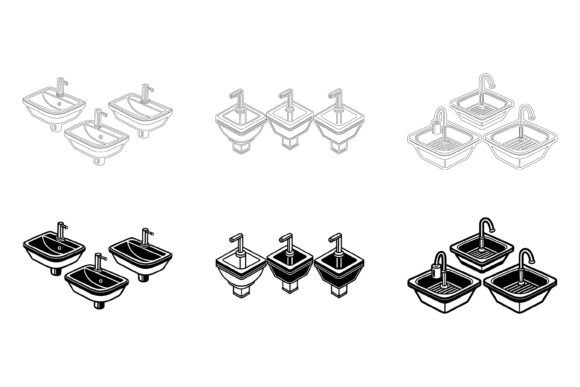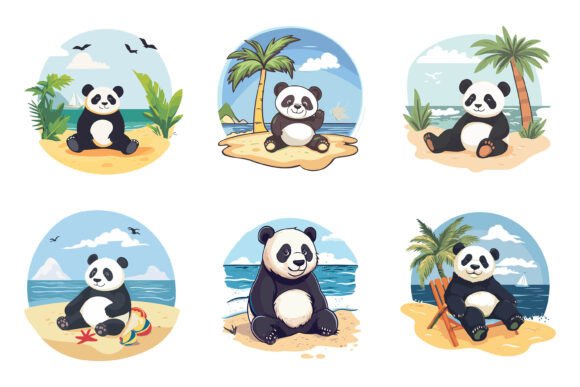
Almond: AI EPS Illustration Set Built for Creators
An illustration pack named Almond might sound simple at first, but the way it packs editable vectors, consistent detailing, and cross-platform readiness into one neat folder shifts how people approach design tasks. It is a collection of AI EPS illustrations accompanied by high‑resolution JPG previews, structured so that both a longtime professional and someone opening Illustrator for the first time can find value without friction. What makes Almond stand out is not a single standout feature, but the careful balance of polish, flexibility, and organizational clarity that serves projects ranging from app interfaces to classroom posters.
Different people notice different things when they first open Almond. A freelancer juggling several branding clients will pay attention to how fast icons can be recolored and dropped into a presentation. A hobbyist exploring digital art cares more about whether the layers make sense without a tutorial. An educator building an infographic about nutrition values whether the visuals feel clean and trustworthy. All of those perspectives are valid, and Almond supports most of them because it was built with a wide user base in mind—without pretending to be the only tool anyone will ever need.
What Almond Actually Contains
When you add Almond to your toolbox, you get a folder that contains the native AI file, a versatile EPS version, and a set of JPG visuals for quick viewing. These are not just loose files tossed together. Every element sits inside a thoughtfully named layer group, so scrolling through the document feels predictable. The structure remains clear whether you work on a Mac, a Windows machine, or switch between both. The files have been tested to open cleanly in industry‑standard software, and the layer naming conventions stay consistent across formats.
For someone who rarely edits vectors, that predictability can lower anxiety. For an experienced designer who often has to salvage messy stock downloads, a well‑organized file means fewer hours spent renaming and reordering before real work can begin. Even a casual browser who just wants to extract one symbol for a birthday invitation can find it fast and export it without hunting through collapsed groups labeled “Layer 103 copy 18.”
Why Consistency and Detail Matter Across Audiences
Almond prioritizes perfection in details and consistency, which is easier to claim than to deliver. When an illustration set is consistent, the line weights in one icon match the line weights in another. The lighting direction stays the same. The geometry of rounded corners follows a uniform logic. That kind of cohesion lets a small business owner pair three icons from Almond on a flyer without worrying that one looks softer, thicker, or oddly dated next to the others. It also helps an app designer maintain a visual rhythm across navigation buttons, onboarding screens, and notification badges—places where small inconsistencies can erode user trust before anyone consciously notices.
For educators, consistency supports comprehension. When a teacher compiles a diagram about recycling using illustrations from Almond, the even styling ensures students focus on the concept rather than on jarring visual noise. A marketer placing icons alongside brand copy benefits similarly: the illustrations reinforce professionalism instead of diluting it. Because the set is built with that core principle in mind, it fits into both high‑polish commercial contexts and informal creative projects without requiring a lot of tweaking.
Ease of Editing Without Hand‑Holding
One of the most practical promises of Almond is that you can edit it, change colors, and modify the illustrations easily. In practice, this means the shapes are not flattened or rasterized inside the vector file. They remain editable paths with clear isolation, so recoloring a group of leaves or adjusting a character’s clothing hue takes only a few clicks. Beginners who have only used simple design tools before can step into Illustrator and feel capable right away. They do not need to master compound clipping masks or trace bitmap workarounds just to personalize an asset.
Meanwhile, experienced creators value editing speed differently. A blogger who needs to match a set of icons to an existing palette will copy‑paste hex codes across multiple elements without breaking sweat. A freelancer under a tight turnaround can scale an illustration to billboard dimensions or shrink it to a favicon without loss, because vectors hold crispness at any size. The EPS file offers another layer of compatibility for those who prefer working in applications such as CorelDRAW or Affinity Designer, while the JPG previews let clients or stakeholders review a flattened version without special software.
How Different People Put Almond to Work
The flexibility of Almond shows up in the diversity of real‑world uses that feel natural, not forced.
- Freelancers and small studios often need to deliver assets for branding, web headers, social media posts, and merchandise mockups. Almond gives them a compact library that can be recolored to align with each client’s identity. Instead of drawing the same cup of coffee or cloud shape from scratch for the fourth time, a designer pulls from Almond, tweaks the color, adjusts the composition, and keeps the project moving.
- Entrepreneurs and solopreneurs who handle their own marketing can use Almond’s illustrations to build a cohesive visual language across a pitch deck, an Etsy shop banner, or a newsletter sign‑up page. The organized layer structure means they do not need a design background to isolate the part they want, change the tint, and export a PNG for Canva or PowerPoint.
- Bloggers and content creators frequently need to illustrate abstract topics—productivity tips, wellness habits, financial planning—without depending on generic stock photography. Almond’s symbols work well in infographics where clarity matters more than artistic flair. Because the illustrations are editable, the blogger can turn a generic calendar icon into a custom content planner visual just by tweaking a few lines.
- Educators and instructional designers benefit from clean graphics that print clearly on worksheets and project well on screens. The cross‑platform compatibility means a teacher who plans on a Windows laptop at school and tidies up at home on a Mac faces no surprises. The JPG files provide a quick way to drop an image into Google Slides when time is short.
- Hobbyists and crafters sometimes use vector sets like Almond to decorate planner stickers, greeting cards, or fabric print designs. The ability to change colors easily is especially valuable here because craft projects often have strict palette constraints. A hobbyist can test several color combinations in minutes without starting over each time.
Suitability Across Print, Web, and Interactive Media
A common friction with illustration packs is discovering they are optimized mainly for one medium. Almond avoids that by being genuinely suitable for print, web, symbols, apps, and infographics. In print, the vector fidelity ensures that a banner or business card preserves sharp edges even at high resolution. For web and app work, SVG exports derived from the AI or EPS files keep the code simple and lightweight. Symbols designed within Almond can become icon font glyphs or interactive UI elements without quality loss. When used in infographics, the illustrations sit comfortably alongside charts and data points because their aesthetic is clean rather than cartoonishly dominant.
This cross‑medium reliability matters to a marketing manager ordering both a trade show backdrop and a series of Instagram stories. It matters to a publisher laying out an e‑book where the same illustrations need to look crisp on a tablet and on paper. And it matters to a developer who receives an icon set from a designer and can count on consistent stroke widths when implementing hover states. Almond’s file setup, with neatly isolated elements, makes that handoff smoother.
How Organization Reduces Friction Over Time
Many users only realize the value of a neatly organized file and layer structure weeks after their first download, when they return to reuse an asset for a fresh project. A chaotic file full of unnamed paths and mystery clipping groups discourages reuse; an orderly one invites it. Almond’s internal logic means that someone who hasn’t opened the file in two months can locate the specific illustration they need without re‑learning a tangled hierarchy. This is particularly useful for businesses that maintain asset libraries across teams, where a second person may need to work on a file originally created by someone else.
Beginners also gain a secondary learning benefit. By inspecting how the layers are grouped and labeled, they pick up practical habits for their own design files. An educator teaching introductory design might even point to Almond’s structure as an example of good digital housekeeping. Over time, this stewardship of files turns a simple purchase into a long‑term reusable resource rather than a single‑use download.
Mac, Windows, and the Peace of a Smooth Launch
Compatibility statements sometimes oversimplify reality. With Almond, the files have been specifically prepared for both Mac and Windows users, and that preparation goes beyond just saving in a cross‑platform format. Fonts are outlined, linked images are avoided, and any effects that might render differently between operating systems are expanded or simplified. This means a designer collaborating with a client who uses a different OS can send the working file without a flurry of “missing font” errors or distorted gradients. Even the EPS, a format sometimes finicky on newer systems, imports reliably into a range of applications.
For someone setting up a new laptop or moving between a home computer and a coworking space machine, this cross‑platform stability keeps momentum alive. They open the file, it looks as expected, and they can keep building.
Deciding If Almond Aligns With Your Goals
Like any illustration collection, Almond thrives where its strengths match the user’s priorities. If you value speed and modification freedom over an ultra‑specific narrative art style, the set makes sense. If your work spans multiple media and you need assets that transition cleanly from a 300‑dpi brochure to a responsive website, the benefit is obvious. If you are learning vector editing and want to deconstruct well‑built assets without fighting a messy file, Almond serves as an unintimidating practice zone.
However, it is worth asking what you care about most. If you seek highly complex, painterly illustrations meant to be used as finished hero images, this set may not replace custom artwork. But if your day involves designing clear, functional, and adaptable graphics that need to be repurposed often, the collection fits. Creators who regularly modify existing assets—recoloring icons, merging or detaching elements, exporting for different platforms—will likely extract the most value. Those who need assets that simply look consistent without requiring manual fixes will also save time.
Getting Started Without Overthinking
Once you have the files, a sensible first step is to open the AI file and simply browse the layers panel. See how the hierarchy maps to what you notice on the canvas. Try selecting an object and changing its fill color. You might notice that several related objects are grouped under a clear name like “Leaves” or “Background Elements,” which makes bulk edits easier. If you plan to use the illustrations in a presentation or social post, export a quick JPG or SVG and test it at the final size to confirm that nothing shifts.
For print projects, opening the EPS in your layout software and checking overprint and transparency behavior ensures a smooth press run. For app design, exporting clean SVGs from the AI file and running them through an optimization tool like SVGO can produce production‑ready icon sets. Even converting selected icons into a custom font via a tool like IcoMoon becomes straightforward because each symbol stands as a self‑contained shape block rather than a fragmented mess.
The fact that these illustrations are meant to be easily edited encourages experimentation. A blogger might take a simple plant illustration and add a subtle gradient for a newsletter header. A small business owner might ungroup a complex icon and use just the central element as a favicon. A developer could take the set and build a small internal icon library with consistent padding and sizing, using the JPGs as reference. The layer of polish already present gives you a strong starting point, and the editable nature keeps you from being boxed in.
Almond ultimately serves as a flexible foundation. Whether the goal is crisp commercial delivery, playful creative tinkering, or something in between, the collection adapts without imposing a steep learning curve. For many users, that blend of readiness and room to personalize is exactly what turns a library of illustrations from “nice to have” into a dependable part of their daily toolkit.