Printable Turkey Illustrations for Every Project
Finding artwork that actually adapts to your workflow can feel like searching for something that checks every box but always falls short in one area. A printable turkey design might sound niche at first, but the people who need it often need it to perform across vastly different scenarios. A kindergarten teacher preparing a Thanksgiving bulletin board has different priorities than a small business owner designing seasonal social media graphics or a crafter making iron-on transfers for family shirts. What connects them all is the desire for artwork that does not lock them into one rigid use case.
The challenge with many illustration downloads is that they arrive in formats that limit what you can do with them. A JPG is fine for a quick printout but useless if you need to enlarge the design without pixelation. A flat raster image cannot be recolored to match your brand palette or classroom theme. This is where the structure and file types included in a well-organized illustration set genuinely determine whether it becomes a go-to resource or something you download, open once, and forget about.
What a Printable Turkey Illustration Actually Offers
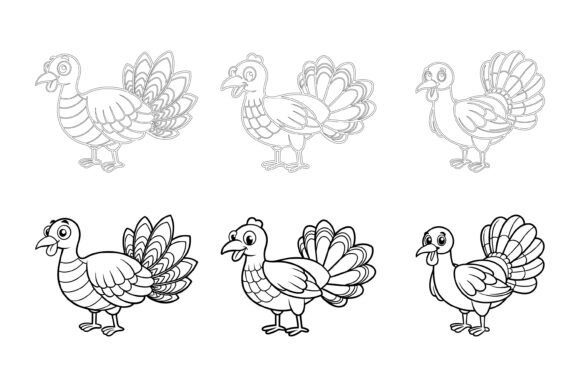
At its core, a printable turkey is a digital artwork file featuring a turkey design, typically suited for autumn projects, Thanksgiving materials, seasonal décor, educational activities, or commercial design work. But the phrase "printable" only tells part of the story. The real difference lies in the file formats and how they are constructed. When an illustration comes packaged with both AI and EPS vector files alongside a high-resolution JPG, you are essentially receiving multiple versions of the same artwork, each optimized for different tasks.
Vector files like AI and EPS are built from mathematical paths rather than pixels. This means you can scale a turkey illustration to the size of a billboard or shrink it down to fit a button without losing a single detail. The JPG gives you a ready-to-use raster version for quick placement in documents, slides, or social media posts where you do not need to modify the core design. Having all three in one package removes the friction of converting files or hunting for alternate formats later.
Why Different People Value Different Things
It is worth stepping back and recognizing that not everyone approaches a printable turkey illustration with the same expectations. A freelance graphic designer might open the AI file immediately, drill into the layers, and begin adjusting stroke weights and color values to fit a client's branding guide. A parent organizing a classroom party might only ever interact with the JPG, printing it directly from a home computer. Neither approach is wrong. The quality of the illustration set is measured by how well it serves both of those people without forcing either one through unnecessary steps.
For Educators and Caregivers
Teachers, daycare providers, and parents often need artwork that prints cleanly and looks cheerful without requiring technical know-how. A printable turkey that arrives with a ready-to-go JPG means they can open the file on a school computer, hit print, and have a usable coloring page, bulletin board accent, or craft template within minutes. The consistency of the design matters here. If the turkey's details are crisp at standard paper sizes, it works. If the lines are muddy or the image pixelates when enlarged for a classroom door display, frustration sets in.
What these users may not realize is how much the behind-the-scenes file organization benefits them indirectly. When the illustrator carefully structured layers and paths in the original AI and EPS files, the exported JPG retains that crispness. Sloppy construction at the vector stage leads to sloppy raster output. So even if an educator never opens the AI file, they still benefit from the illustrator's attention to detail.
For Small Business Owners and Marketers
Seasonal marketing runs on tight timelines. A bakery promoting Thanksgiving pie orders, a boutique sending out an autumn newsletter, or a restaurant updating its menu inserts all need visuals that look polished and on-brand. The ability to edit, change colors, and modify the turkey icon easily becomes critical here. Maybe the business uses a warm terracotta and cream palette instead of traditional orange and brown. With an editable vector file, recoloring takes seconds in Adobe Illustrator or a compatible program.
Beyond color, marketers often need to break apart illustrations. They might want to use only the turkey's feathers as a background pattern or isolate the bird's silhouette for a simplified logo treatment. When the file structure is neatly organized with properly named layers and grouped elements, these modifications happen quickly. When the file is a flattened mess of unlabeled paths, even simple edits become time-consuming puzzles. The difference directly affects how quickly someone can turn around a campaign asset.
For Crafters and Hobbyists
People who make physical goods—vinyl decals, screen-printed shirts, laser-engraved signs, scrapbook embellishments—need artwork that imports cleanly into cutting and design software. An EPS file tends to play nicely with programs like Cricut Design Space, Silhouette Studio, and CorelDRAW. The vector paths translate into cut lines, meaning a printable turkey can become a heat-transfer vinyl design for a family reunion shirt or a stencil for wood burning.
Crafters often work across multiple machines and software versions. The fact that the illustration set is designed for Mac and Windows users signals broader compatibility. This matters when someone designs on a Windows laptop but sends the file to a maker space that runs Mac-based equipment, or vice versa. Cross-platform functionality is not a luxury in these scenarios; it is what keeps a project moving forward.
For Designers and Creative Professionals
Experienced designers inspect files differently. They open the AI file and immediately check how the artwork was built. Is every element on its own logical layer? Are the paths clean and efficient or overcomplicated with unnecessary anchor points? Does the illustration maintain visual consistency, or do some details look like afterthoughts? The phrase perfection in details and consistency speaks directly to this evaluation process.
Professionals also think about downstream usage. An illustration they incorporate into a client's brand toolkit might end up on print, web, symbols, apps, and infographics. The same turkey icon that appears on a printed flyer might later need to function as a tiny app button or an infographic element. Vector artwork handles this range gracefully. Raster artwork does not. Knowing the source files are vector-based gives designers confidence that the illustration can follow the project wherever it goes without quality degradation.
For Beginners and Casual Users
Not everyone who downloads a printable turkey has design experience or expensive software. Some people are putting together a holiday card in a basic editing program or even Microsoft Word. For them, ease of use is everything. The included JPG means they can drag and drop the artwork without thinking about file compatibility. The fact that the illustration is already well-composed and balanced means they do not need to make adjustments. They simply use it as-is and get a result that looks far better than clip art from a free repository.
Beginners also appreciate not being overwhelmed. A download that unpacks into a clear folder structure with sensibly named files feels welcoming rather than intimidating. It reduces the mental load of figuring out which file to open for which purpose, making the experience smoother for someone who just wants a nice turkey image for their project.
Practical Scenarios Where the Right Files Matter
Consider a few real-world situations to understand why file format and construction quality translate into practical benefits. A blogger writing a Thanksgiving recipe roundup needs an appealing header image. They open the JPG, drop it into Canva, add text, and publish within minutes. The post looks professional because the underlying illustration did not require tweaking.
A print shop owner receives a customer order for custom Thanksgiving placemats. The customer provides the turkey illustration in EPS format. The shop owner opens it in their design software, scales it to the exact dimensions needed, adjusts the colors to match the customer's dining room theme, and sends it to the large-format printer. The print comes out sharp because the vector artwork scaled cleanly.
An app developer building a seasonal sticker pack for a messaging platform needs icons at multiple resolutions. They open the AI file, export the turkey graphic in the required sizes, and integrate it into the app. Every size looks identical in quality because the source is resolution-independent.
A Sunday school teacher needs a turkey coloring page for the weekend class. They print the JPG directly, make copies, and the children color within distinct lines because the original design had well-defined shapes. The simplicity of the workflow matters as much as the final output.
Evaluating Whether an Illustration Set Fits Your Needs
With so many digital products available, it helps to have a mental checklist when deciding if a printable turkey illustration set aligns with what you actually need. Start by asking what you plan to do with it. If you only need a one-time print, a standalone JPG might suffice, but a set that includes vectors gives you future flexibility. If you need to match brand colors or a specific palette, the ability to edit and recolor within the AI or EPS file becomes non-negotiable.
Think about the environments where the artwork will appear. A design used solely on screen can tolerate lower resolution. A design destined for print needs the sharpness that vector files provide. A design that might end up in both places—which is increasingly common—benefits from having vector and raster options ready from the start.
Also consider your comfort level with design software. If you have never opened Adobe Illustrator, the AI and EPS files might go unused, and that is okay. The presence of a high-quality JPG still delivers value. But the option to learn and grow into the editable files exists, which adds long-term usefulness to the purchase. Someone who starts as a beginner printing simple pages might later explore recoloring and modifying the artwork as their skills develop, all from the same original download.
Why Construction Quality Affects Everyone
Whether you are a professional designer or someone printing a turkey for the first time, the neatly organized file and layer structure affects your experience. For the professional, it means efficient edits and the ability to extract individual elements without hunting through hundreds of unnamed paths. For the casual user, it means the exported JPG looks clean because the original artwork was built thoughtfully. You cannot always see the difference between a well-structured file and a chaotic one in the final output, but you absolutely feel it when you try to modify anything.
Consistency across the illustration matters too. A turkey design where the feathers are rendered in one style but the body in another can look jarring and amateurish. When the illustrator prioritizes perfection in details and consistency, the artwork holds together visually, which means it sits more naturally alongside other design elements you might pair it with, like typography, borders, or background textures.
The cross-platform compatibility note—that the files are designed for Mac and Windows users—also speaks to broader usability. It signals that the files were saved and tested in formats that open correctly regardless of operating system, reducing the frustrating scenario of downloading something only to find it incompatible with your setup. For teams where some members work on Macs and others on PCs, this compatibility prevents workflow interruptions.
Matching the Illustration to Your Goals
A printable turkey might seem like a straightforward product, but whether it meets your expectations depends heavily on what you are trying to accomplish. If your goal is speed—grabbing an image and using it immediately—the JPG format and well-executed design serve you best. If your goal is flexibility—changing colors, resizing, isolating elements—the vector files and clean layer structure become essential. If your goal is producing physical goods, the EPS compatibility and scalable paths matter most.
There is also the matter of creative confidence. Having source files you can edit means you are not stuck with someone else's color choices. You can adapt a traditional turkey illustration to fit modern aesthetics, muted palettes, playful brights, or whatever suits your project's personality. This creative control extends the lifespan of the artwork far beyond a single seasonal use, making it a reusable asset rather than a one-off download.
For small business owners and entrepreneurs, that reusability translates into cost efficiency. For hobbyists, it means more creative freedom. For educators, it means being able to adapt materials to different age groups and themes without purchasing new artwork each time. The common thread is that the value of the illustration grows when the files are built to support multiple workflows rather than a single predetermined outcome.
Ultimately, the right illustration set is one that quietly meets you where you are while leaving room for where you might go next. It does not demand expertise but rewards it if you have it. It works for the quick project and the complex one. And it gives you exactly what the file structure promises: artwork that prints beautifully, edits smoothly, and integrates into whatever you are making without friction.