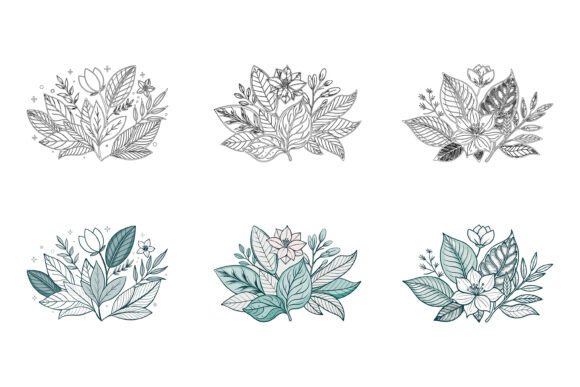
Discover the Art of Hand-Drawn Botanical Flower Illustrations: Your Guide to Premium AI EPS Collections
In the world of digital design, few elements carry the timeless charm and organic beauty of a hand-drawn sketch of a botanical flower. These artistic renderings bridge the gap between traditional illustration techniques and modern digital workflows, offering designers a versatile resource that feels both personal and professionally polished. Whether you are a seasoned graphic designer, a small business owner crafting your brand identity, or a hobbyist exploring creative projects, understanding what makes a premium illustration collection special can transform the way you approach your work.
Welcome to the fascinating realm of curated AI EPS illustration sets, where meticulous craftsmanship meets practical functionality. These collections are not merely bundles of images; they represent carefully constructed design assets built to serve a wide array of creative needs. From the delicate veins of a petal to the sweeping curve of a stem, every detail in a high-quality botanical illustration contributes to a sense of authenticity that resonates with viewers on an emotional level.
What Makes Hand-Drawn Botanical Illustrations So Compelling?
Before diving into the technical specifications of illustration files, it is worth exploring why botanical flower sketches hold such enduring appeal. Throughout history, botanical illustration has served both scientific and aesthetic purposes. Early naturalists relied on detailed drawings to document plant species long before photography became accessible. Today, that same precision and artistry infuse digital designs with a sense of heritage and sophistication.
A hand-drawn floral element carries subtle imperfections—a slightly uneven line, a gentle variation in stroke weight—that digital-only creations often lack. These characteristics make the artwork feel alive and approachable. When you incorporate such illustrations into your projects, you invite viewers to pause and appreciate the craftsmanship behind the visual. This connection is invaluable in an age dominated by sterile, overly polished stock imagery.
The Emotional Language of Botanical Art
Botanical illustrations communicate messages that words alone cannot convey. A delicate wildflower sketch suggests whimsy and freedom. A structured, formal rose drawing evokes elegance and tradition. Understanding this visual vocabulary allows you to select illustrations that align perfectly with your project's tone and purpose. The best illustration collections provide enough variety to speak multiple emotional languages, giving you creative flexibility without sacrificing cohesion.
Why AI EPS Files Are the Gold Standard for Illustration Collections
When investing in digital illustration assets, file format matters immensely. The AI (Adobe Illustrator) and EPS (Encapsulated PostScript) formats represent the industry standard for professional vector artwork. Unlike raster images composed of pixels, vector graphics are built from mathematical paths, meaning they can scale infinitely without losing quality. This characteristic alone makes them indispensable for designers who need to use the same illustration across vastly different contexts—from a tiny mobile app icon to a large-scale printed banner.
Additionally, both AI and EPS files preserve editability. You are not stuck with the colors, stroke weights, or individual elements as they appear in a flat preview. Instead, you can open the file in vector editing software, select specific components, and modify them to suit your exact requirements. This flexibility transforms a static illustration into a dynamic design building block.
JPG Files: The Versatile Companion Format
Many premium illustration sets, including specialized collections, thoughtfully include JPG versions alongside the vector source files. While JPGs are raster images and therefore not infinitely scalable, they serve an essential role in rapid prototyping, quick placement in documents, and use in software that does not support native vector formats. Having both AI/EPS and JPG options means you can work efficiently without unnecessary file conversions at every step of your process.
Designed for Mac and Windows Users Alike
One of the most practical considerations when purchasing digital design resources is cross-platform compatibility. A truly professional illustration set works seamlessly for both Mac and Windows users. The inclusion of universally compatible file formats ensures that your operating system preference never becomes a barrier to accessing high-quality artwork. Whether you work in Adobe Illustrator on a MacBook, CorelDRAW on a Windows desktop, or even open-source alternatives like Inkscape, well-prepared AI and EPS files function reliably across environments.
This cross-platform design philosophy reflects an understanding of the diverse reality of modern creative workspaces. Design teams often include members using different operating systems. Freelancers collaborate with clients who may have different technical setups. A collection built with this awareness removes friction and lets you focus on what truly matters: the creative work itself.
Neatly Organized Files and Layers: A Designer's Best Friend
Have you ever downloaded a design asset only to find a chaotic mess of unlabeled layers and confusing file naming conventions? Such disorganization wastes precious time and introduces unnecessary frustration into your workflow. Premium illustration collections distinguish themselves through neatly organized file and layer structures. Each element is thoughtfully grouped and labeled, allowing you to locate specific components—a particular leaf, a flower center, a stem segment—within seconds.
This organizational discipline extends to the file system level as well. Logical folder hierarchies, consistent naming conventions, and clear separation between file types make navigation intuitive. When you are working against a deadline, the ability to quickly find and modify exactly what you need is not a luxury; it is a necessity. Organized assets respect your time and support a smooth creative process from start to finish.
The Value of Structured Layers in Vector Files
Within the AI and EPS files themselves, layer management is a hallmark of professional preparation. Layers might be organized by plant part, by color group, or by illustration variant. This structure enables you to isolate elements effortlessly—perhaps you want to use only the leaf without the flower, or you need to apply a gradient to the petals while leaving the stem untouched. With well-structured layers, such modifications become simple tasks rather than complex digital surgery. The convenience is especially appreciated by beginners who may not yet be comfortable navigating deeply nested vector paths, as well as by experienced users who value efficiency above all.
Perfection in Details and Consistency
When you examine a hand-drawn botanical sketch, the quality resides in the details. The subtle taper of a line, the precise curvature of a petal edge, the natural spacing between parallel veins—these micro-level choices accumulate to create an impression of excellence or mediocrity. Premium collections invest heavily in perfection in details and consistency across every illustration in the set.
Consistency means that all illustrations within a collection share a unified stylistic language. They look like they belong together, making it easy to combine multiple elements into a cohesive composition. This is particularly important for branding projects where visual consistency reinforces professional credibility. Imagine a wedding invitation suite where the floral motifs on the save-the-date card, the invitation itself, and the thank-you notes all feel harmoniously connected. That seamless experience begins with a consistently crafted illustration set.
"Details are not the details. They make the design." This famous principle by Charles Eames perfectly captures why meticulous attention to every line, curve, and anchor point matters in illustration collections meant for professional use.
Suitable for Print, Web, Symbols, Apps, and Infographics
The true measure of an illustration set's value lies in its breadth of applicability. A specialized botanical collection should not pigeonhole you into a single use case. Instead, it should adapt effortlessly to diverse contexts. Consider the following applications where high-quality botanical illustrations excel:
- Print Materials: Business cards, letterheads, packaging, book covers, posters, and stationery all benefit from the organic elegance of floral artwork. Vector formats ensure crisp output at any print resolution.
- Web Design: Website headers, blog post featured images, background patterns, and UI embellishments gain personality through botanical elements. Scalable vectors look sharp on retina and high-DPI displays.
- Symbols and Icons: Simplified botanical forms make distinctive icons for apps, websites, and wayfinding systems. The ability to edit and simplify vectors means you can reduce complex flowers into clean, recognizable symbols.
- Mobile and Desktop Apps: App interfaces, onboarding screens, and in-app illustrations feel warmer and more inviting with botanical touches.
- Infographics: Data visualizations and educational graphics become more engaging when accompanied by relevant botanical illustrations that reinforce themes of growth, nature, health, or sustainability.
This versatility ensures that your investment in an illustration collection continues to pay dividends across multiple projects and platforms over time. You are not buying a single-use asset; you are acquiring a comprehensive creative toolkit.
Easy Editing: Change Colors and Modify Icons with Confidence
One of the most empowering features of a well-constructed vector illustration set is the ease with which you can edit, change colors, and modify icons to precisely match your needs. Perhaps the original illustration features soft pink petals, but your brand palette demands deep burgundy. Maybe you need to adjust the stroke weight for better visibility at small sizes. With properly built AI and EPS files, such modifications are straightforward.
You can recolor entire illustrations with a few clicks, extract individual elements to create new compositions, or combine pieces from different illustrations within the collection. This adaptability means the illustrations grow with your projects. A floral element that started as part of a logo can later be adapted into a pattern, an icon, or a decorative border—all while maintaining visual consistency with your established design language.
Empowering Beginners While Satisfying Professionals
The intuitive editability of quality vector files makes them accessible to designers at every skill level. Beginners can start with simple color changes and gradually explore more complex modifications as their confidence grows. Experienced professionals can dive deep into node-level adjustments, custom gradient applications, and intricate path manipulations. An illustration set that welcomes both ends of this spectrum is a resource that remains relevant throughout your creative journey.
What to Look for When Choosing a Botanical Illustration Collection
With an understanding of what makes premium collections special, you can approach your selection process with clarity. Here is a practical checklist of qualities to prioritize:
- Authentic Hand-Drawn Quality: Look for illustrations that retain the warmth and character of traditional sketching. Avoid sets that feel mechanically traced or overly uniform.
- Multiple File Formats: AI and EPS for editing and scaling; JPG for quick placement. The presence of all three indicates thorough preparation.
- Cross-Platform Compatibility: Confirmation that files work on both Mac and Windows systems, ideally tested across multiple software applications.
- Organized Structure: Clear layer naming, logical grouping, and intuitive file organization that respects your workflow.
- Stylistic Consistency: A unified visual language across all illustrations in the set, enabling harmonious combinations.
- Detailed Craftsmanship: Evidence of care in every line, curve, and connection point. Zoom in and examine the paths if possible.
- Broad Use Cases: Suitability for print, digital, and symbolic applications, maximizing the return on your investment.
Practical Tips for Working with Botanical Vector Illustrations
Once you have selected a quality illustration collection, a few best practices will help you extract maximum value from your new resources:
Start with exploration. Before jumping into a specific project, spend time browsing the entire collection. Note which illustrations resonate with you and imagine potential applications. This familiarity will spark ideas when future design challenges arise.
Experiment with color. Try applying your brand colors, seasonal palettes, or unexpected color combinations to the illustrations. Sometimes a single color shift can completely transform the mood of a botanical element, opening up new creative directions.
Combine and compose. Do not limit yourself to using illustrations in isolation. Layer different elements to create rich botanical compositions. A background of delicate leaves, midground flowers, and foreground accent details can produce stunning results that feel entirely custom.
Respect the artwork. While editing is encouraged, maintain an appreciation for the original hand-drawn character. Avoid over-processing that strips away the organic qualities that made the illustrations appealing in the first place. The goal is enhancement, not erasure.
The Lasting Value of Investing in Quality Design Resources
In a marketplace flooded with generic, low-cost graphics, choosing a thoughtfully crafted botanical illustration collection represents a commitment to quality. The initial investment pays off through time saved, versatility gained, and the professional impression your projects make on audiences. Every time you reach for an illustration from a well-organized, beautifully executed set, you experience the cumulative benefit of someone else's meticulous preparation.
Moreover, botanical themes possess a timelessness that transcends fleeting design trends. Flowers, leaves, and organic forms have adorned human creations for millennia and will continue to do so. By building your resource library with high-quality botanical vectors, you equip yourself with assets that remain relevant year after year, project after project.
So whether you are designing a brand identity, crafting an invitation, building a website, or creating educational content, the right illustration set becomes more than a purchase—it becomes a lasting creative partner. The combination of hand-drawn authenticity, technical precision, organizational clarity, and versatile applicability makes a premium AI EPS collection an invaluable addition to any designer's toolkit. The question is not whether you need quality botanical illustrations, but rather which projects will benefit first from their inclusion.