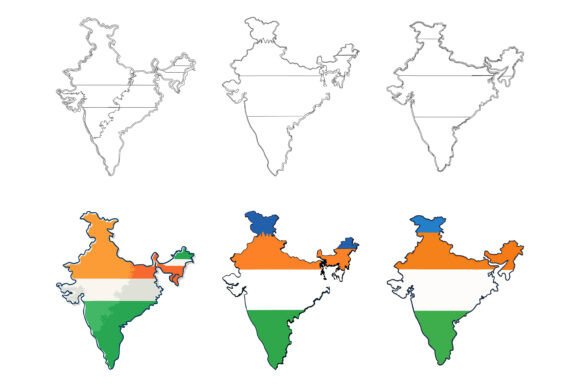
India's Visual Soul Captured in AI EPS Illustration Sets
India carries an unmistakable visual identity. From the intricate geometry of Mughal architecture to the bold typography on street-side chai stalls, the country offers a design language that feels both ancient and urgently contemporary. For designers, marketers, and content creators working with vector graphics, Indian-themed AI EPS illustration collections have become a practical shortcut to authentic storytelling. These aren't just decorative clip art dumps. The better sets reflect real cultural nuance, regional diversity, and the kind of detail work that would take days to build from scratch.
What makes these collections genuinely useful is how they bridge the gap between traditional Indian aesthetics and modern digital workflows. A well-structured AI EPS file gives you editable vectors, organized layers, and color palettes you can tweak in minutes. You might need a Durga Puja illustration for a festival campaign, or simplified line-art of Indian street food for a restaurant menu, or regional motifs for a wedding invitation suite. Starting with a solid illustration set means you spend your time customizing rather than constructing.
Why Indian-Themed Vector Art Matters Right Now
The demand for India-inspired design assets has grown steadily as more brands, publishers, and independent creators target South Asian audiences or incorporate Indian elements into global work. Food bloggers documenting regional cuisines need consistent iconography. Travel platforms want location-specific illustrations that avoid stereotypes. Edtech companies building content for Indian classrooms require culturally familiar visuals that help concepts stick.
Generic stock illustrations often miss the mark. You'll see oddly colored turbans, temple architecture that mixes North and South Indian styles nonsensically, or festival depictions that get the rituals wrong. Purpose-built Indian illustration sets, when researched properly, solve this problem. They're created by designers who understand the cultural context, which means the visuals feel genuine rather than approximated.
The Editable Advantage: AI EPS and JPG Formats
Vector formats like AI and EPS are the industry standard for good reason. You can scale a graphic from a business card size to a billboard without losing a pixel of sharpness. The included JPG files serve as quick preview references or ready-to-use web assets when you don't need to customize anything. Having both formats in one package means you're covered for print production, digital publishing, app interfaces, and presentation decks without hunting for conversions.
The real value sits in editability. Need to change the color of a saree illustration from red to teal for brand consistency? You can do that in seconds. Want to isolate just the peacock motif from a larger composition? The layer structure lets you grab exactly what you need. This flexibility matters when you're working across multiple client projects, each with their own visual guidelines.
Where Indian Illustration Collections Deliver Real Impact
You'll find these assets showing up in places you might not immediately expect. Here's a practical breakdown of how different professionals put them to use.
Branding and Identity Work. Small businesses serving Indian communities — grocery stores, yoga studios, Ayurvedic wellness brands, catering services — often need visual identities that feel rooted. An illustration set with rangoli patterns, lotus motifs, or spice illustrations gives designers a starting vocabulary they can adapt rather than inventing from zero.
Educational Content. Teachers and curriculum developers creating materials about Indian history, geography, or festivals find vector illustrations invaluable. You can build worksheets with accurate depictions of monuments like the Konark Sun Temple, maps with regional textile patterns, or science diagrams that use familiar Indian contexts. The illustrations become cognitive anchors for students who see their own culture reflected in learning materials.
Digital Products and Apps. UI designers working on apps for the Indian market often need onboarding illustrations, empty-state graphics, or notification icons that feel locally relevant. A chai cup illustration for a "no new notifications" screen lands differently in Mumbai than a coffee mug would. These small contextual details improve user experience in ways that analytics don't always capture but users definitely notice.
Event and Print Design. Wedding planners, event coordinators, and print shops handling Indian celebrations frequently use vector art for invitations, banners, stage backdrops, and favor packaging. Diwali, Eid, Pongal, Christmas, and wedding season all call for distinct visual approaches. Having organized illustration files with separate layers for borders, icons, and decorative elements speeds up production significantly.
Cross-Platform Compatibility and Workflow Integration
These illustration sets are designed for both Mac and Windows users, which eliminates the friction that sometimes comes with font mismatches or format incompatibilities. Adobe Illustrator remains the primary editing environment, but EPS files also import cleanly into Affinity Designer, CorelDRAW, Inkscape, and other vector applications. For teams where designers use different operating systems or software preferences, this cross-platform reliability keeps projects moving.
The neatly organized file structure deserves a specific mention because it affects your daily workflow more than feature lists suggest. Opening a file and finding clearly named layers — "foreground elements," "background patterns," "text placeholders," "shadow overlays" — means you spend less time decoding someone else's logic and more time making creative decisions. Consistency in layer naming across multiple illustration files also helps when you're combining assets from different sets into one composition.
Practical Considerations When Choosing Indian Illustration Collections
Not all sets offer the same quality or attention to detail. Before purchasing or downloading, look closely at preview images. Check how the illustrations handle complex details like henna patterns, textile textures, or temple carvings. If the preview shows simplified, generic shapes where intricacy should exist, the vector file likely takes the same shortcuts.
Color customization matters enormously for Indian-themed work. Traditional Indian design uses vibrant, specific palettes — the deep saffron of a monk's robe, the turmeric yellow of haldi ceremonies, the particular blue of Jodhpur architecture. A good illustration set uses colors thoughtfully in its default state and makes swapping those colors easy through organized swatches or clearly separated shape layers.
Consider whether the collection covers your actual needs rather than just looking impressive at first glance. A set might offer forty illustrations of Indian sweets, but if you need regional diversity — Bengali mishti alongside Gujarati mithai alongside South Indian payasam variants — verify that the variety exists. Cultural specificity adds credibility to your work; generic "Indian food" illustrations feel hollow to audiences who know the difference.
File size and complexity warrant attention too. Highly detailed vector files with thousands of anchor points can slow down older machines or cause issues when importing into certain applications. The best collections balance richness of detail with practical performance, offering simplified and detailed versions where appropriate.
Editing Workflows That Maximize Value
Once you have a quality Indian illustration set, a few habits help you extract more from it. Start by duplicating the original file and working on a copy — this preserves your source material for future projects. Use global color swatches if your software supports them, so changing one color updates every instance across the illustration. Group-related layers and name them intuitively for your specific project rather than keeping the default labels.
Don't hesitate to mix and match. The paisley border from one file might pair beautifully with the mandala centerpiece from another. Since vector elements scale freely, you can build entirely new compositions from component parts. This approach turns an illustration collection from a set of static graphics into a flexible design system you can remix across projects.
For print work, always confirm your color mode and resolution settings before final output. Vector files stay crisp at any size, but converting to CMYK for offset printing requires attention to color shifts, especially in the vibrant oranges, pinks, and golds common in Indian design. Soft-proofing against your printer's profile catches surprises before they reach paper.
The Bigger Picture for Creative Professionals
India's visual heritage offers an extraordinary depth of material for illustrators and designers. What these AI EPS collections provide isn't a replacement for custom illustration work — it's a practical foundation that respects the complexity of Indian design traditions while meeting the speed demands of modern creative work. When you find a set with genuine attention to detail, organized structure, and culturally informed design choices, it becomes a resource you return to across multiple projects and seasons.
The files are built for modification, not just consumption. You can pull individual elements, recolor entire palettes, simplify complexity for small-scale use, or combine assets into new arrangements. That flexibility means the collection adapts to your evolving needs rather than locking you into a single visual style. For the freelancer juggling client deadlines, the marketing team building campaign assets, or the educator creating engaging materials, that adaptability translates directly into better work produced in less time.