Peacocks: Elevate Design Projects with AI EPS Art
Peacock illustrations have a timeless draw. Their ornate plumage, striking colours, and graceful silhouettes speak of beauty, confidence, and attention to detail—qualities many brands, publishers, and creators want to channel. When these visuals come in a well-structured AI EPS illustration set, they become more than just pretty pictures; they turn into flexible, production‑ready assets that save hours of design time. This article unpacks what makes a thoughtfully compiled peacock collection valuable, who stands to gain the most, and how you can put it to work across digital and print media without hitting the usual creative roadblocks.
Why Peacock Imagery Works So Hard for Your Message
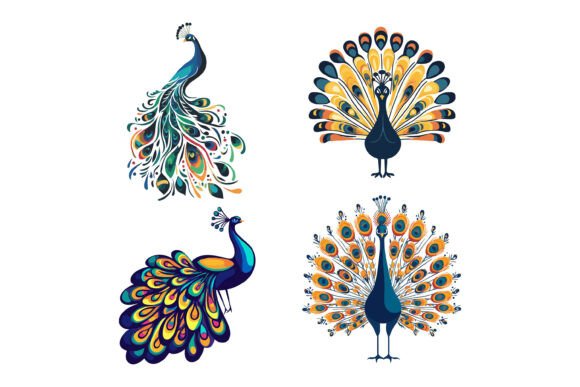
Peacocks naturally command attention. The bird’s fan‑like feathers, jewel‑toned eyespots, and elegant stance carry a sense of luxury, renewal, and individuality. In visual communication, that makes the motif surprisingly versatile. A fintech startup might use a stylised peacock icon to suggest growth and prestige. A wellness brand could lean on it for themes of vitality and pride. An educational publisher might incorporate peacock elements into a biology infographic about sexual dimorphism or courtship displays. Because the symbol straddles cultures and contexts, a single high‑quality illustration can be re‑purposed across many campaigns, from social media posts to conference banners. A set centred on peacocks gives you not just one look but multiple variations—full crests, isolated feathers, silhouettes, or detailed profiles—so the motif never grows stale.
The Real Power of an AI EPS Format
Many people ask why EPS files still matter in a world of PNGs and SVGs. The answer lies in the format’s longevity and precision. An EPS (Encapsulated PostScript) file retains vector data that print shops, sign makers, and high‑end editing software interpret cleanly. When you open an AI or EPS illustration in Adobe Illustrator, CorelDRAW, Affinity Designer, or even late versions of Inkscape, you get access to every anchor point, curve, and colour swatch. That means you can scale a 2‑cm peacock feather to the size of a billboard without a single jagged edge. For anyone who has struggled with pixelated graphics midway through a project, this alone is a massive time and anxiety saver. The collection doesn’t lock you into one file type either: along with editable vectors, you typically receive a JPG preview or companion render that lets you quickly drop the image into presentations, mock‑ups, or emails while keeping the master vector intact for final output.
Practical Design Benefits You’ll Notice Immediately
When you start working with a curated EPS illustration set, the benefits extend well beyond format. Here’s where the collection described really stands out, based on the qualities that seasoned designers look for:
- Neatly organized layers and files: Instead of getting a single flattened image, you receive a file where every major element—tail feathers, body, crest, individual colour zones—sits on its own named layer. This makes isolating, hiding, or tweaking parts quick and frustration‑free. For a deadline‑driven project, the difference between an organized file and a jumbled one can mean finishing an hour early or late.
- Consistency across the set: The peacock illustrations share a unified visual language—stroke weights, shading style, colour palette harmony—so when you use several from the collection in a brochure or website, they don’t clash. Consistency signals professionalism, even if the end viewer can’t quite put their finger on why the page feels so polished.
- High‑detail yet adaptable: The artwork captures intricate feather patterns and subtle gradients, yet the source file is built so you can simplify or recolour without destroying the illusion of detail. That balance is hard to find and separates a thoughtfully crafted asset from a generic icon pack.
These features eliminate the typical “re‑draw from scratch” moments that eat into creative budgets. Instead of compensating for poor file hygiene, you spend time on the creative direction that truly moves the needle.
Where the Peacock Collection Fits into Real Workflows
To see the value, consider a few concrete scenarios. A marketing manager preparing a spring campaign for a boutique hotel chain might need a suite of elegant icons for a welcome booklet. The peacock—a long‑standing symbol of hospitality in many regions—nods to luxury. Because the EPS set includes multiple poses and detail levels, the designer can pull a silhouette for the app navigation bar, a full‑colour illustration for the spa services page, and a subtle feather watermark for the stationery, all from the same collection. The layer structure means swapping the deep emerald tones for a teal that matches the hotel’s accent colour takes seconds, not hours.
A small business owner running an online shop can use the JPG preview on a product hangtag graphic for immediate publishing, then later edit the vector file to create a custom embroidery patch design for actual merchandise. The same asset serves both quick social posts and high‑quality production files, giving a one‑person operation the output capacity of a larger studio. Bloggers and educators can integrate the peacock art into infographics explaining biodiversity, while app developers might use a simplified symbol from the set as an onboarding screen illustration, confident that the icon scales cleanly from a tiny smartwatch face to a tablet display.
Cross‑Platform Freedom Without Headaches
It’s easy to overlook compatibility until a file refuses to open. The fact that the peacock illustration set is designed for both Mac and Windows users eliminates a common pain point. Whether your team runs Adobe Creative Cloud on macOS or uses CorelDRAW on Windows, the AI and EPS files load natively. Even open‑source tool users benefit, because the well‑constructed layers and standard colour modes (often CMYK and RGB) translate reliably across different rendering engines. This cross‑platform design is especially valuable when working with external partners: a marketing coordinator can confidently hand the files to a freelance designer or a printing company without a volley of “Can you resend that in version X?” emails. The JPG companion files also guarantee that non‑designers on a team can preview and comment on the artwork without needing vector software installed.
Editing Freedom That Protects Your Original Intent
One fear professionals have with stock illustration is that customizing it will break the integrity of the art. In a well‑constructed EPS set, the heavy lifting has already been done: anchor points are placed logically, shapes are closed and clean, and colours use global swatches. Changing the primary hue of a peacock’s plumage to match brand guidelines can be as simple as adjusting one global colour and watching every instance update instantly. Need to simplify for a single‑colour print job? Hide the gradient layers and stroke outlines, and your detailled peacock becomes a crisp line art logo. Because the file comes with a layer structure that clearly labels the “detailed plumage,” “body base,” and “crest silhouette,” you don’t guess which object to click; you know. For someone who isn’t a full‑time illustrator but still needs polished results, this guard‑rail approach is empowering.
Customization also extends to composition. The collection includes multiple peacock poses and feather arrangements. You can combine elements to create a new composition—maybe taking the spread tail from one file and the perched pose from another—without redrawing anything. That kind of modularity multiplies the output you get from a single purchase, and it is only possible when the creator has planned the file hierarchy with reuse in mind.
Who Gains the Most from These Assets
While any visual creator can use a peacock EPS set, certain groups see an outsized return:
Graphic designers and illustrators who work with tight budgets or waiting for clients to approve original sketches can use these as a base to accelerate the concept phase. Marketing professionals at mid‑sized companies often need versatile imagery that works for both high‑end print brochures and digital banner ads without hiring an illustrator for every seasonal refresh. Freelancers juggling multiple brand identities appreciate the time saved when a well‑organized file lets them deliver three distinct looks from one set. Small business owners building their first visual identity gain a professional starting point that doesn’t look like generic clip art. Educators and bloggers who create learning materials benefit from the biological detail and the ability to annotate a scalable illustration in applications like PowerPoint or Canva (via the JPG or imported SVG). Even crafters and hobbyists who use cutting machines can extract silhouettes from the EPS to create stencils or iron‑on designs—with a little tracing, the vector precision carries over perfectly.
Points to Consider Before You Jump In
No asset is perfect for every situation. Working with EPS files requires vector editing software; if your only image tool is a raster‑based program like Photoshop, you can still place the file as a smart object, but the true layer‑based editing may be limited unless you open it in Illustrator. The intricacy of peacock illustration also means that very low‑memory devices might lag when handling numerous anchor points, though modern computers rarely struggle. If you need a style completely different from the collection’s aesthetic—say, a flat minimal icon with no shading—you can certainly edit the file to achieve that, but it might be quicker to look for a set built specifically in that style. That said, the described set includes simplified symbol options as well as detailed renders, which covers a wide spectrum of needs without forcing you to leave the collection.
Also, while the JPG previews are convenient for quick placement, remember they are raster files and won’t scale like the vectors. For print projects, always embed the original AI or EPS, and for web, export to SVG or high‑resolution PNG from the master file. This small extra step preserves the crispness that makes the collection shine.
Practical Tips for Using Peacock Vector Art Effectively
To get the most from the set, try a few proven workflows. Start by opening the AI/EPS file and immediately saving a copy under your project name—this preserves the master art untouched. Spend five minutes exploring the layers palette to understand the naming convention; it pays off every time you need to isolate an element later. If you plan to use the peacock across several brand colours, use global colour swatches in Illustrator and re‑link them so one change updates the entire document. For web projects, export the final graphic as an SVG with outlined strokes to avoid font or stroke‑width discrepancies across browsers. When printing, convert colours to the required CMYK profile early; the well‑structured file usually handles the conversion gracefully, but a quick gamut check avoids dullness in the peacock’s jewel tones. Finally, if you’re collaborating, share a PDF print‑ready version with the team for comments and keep the editable EPS in your own pipeline, so the master file remains undisturbed.
Why the “Neatly Organized” Promise Actually Matters
Many creative assets claim to be tidy, but in practice you find merged shapes, unnamed compound paths, and mystery layers. The peacock set described here puts organisation at the front. Every feather group, body part, and background element has a clear label. For a designer onboarding a client’s project, that means you won’t waste time ungrouping and staring at a thousand paths. For an educator creating a step‑by‑step visual guide, you can progressively reveal layers to show students how an illustration is built. For a marketer who knows just enough Illustrator to be dangerous, the clarity reduces the chance of breaking something important. This structural care is the under‑the‑hood detail that separates a professional asset from a hobbyist upload, and it quietly raises the quality bar of whatever you produce with it.
Bringing It All Together Across Media
Peacock illustrations in AI EPS format are not a one‑trick pony. On a retail website, a stylised peacock feather can serve as a decorative bullet point for “premium features.” On a mobile app, a simplified peacock icon can guide users to a loyalty programme. In a printed annual report, a large, softly tinted peacock illustration adds a layer of visual storytelling without overwhelming the data. In an infographic about the fashion industry, the bird’s historical significance becomes a graceful anchor graphic. The same collection can become a source for packaging stickers, trade show booth backdrops, employee T‑shirt designs, and classroom posters. Because the source files are vector and editable, you maintain brand cohesion across all these applications without commissioning custom artwork each time.
The peacock itself—rich in meaning and visual impact—already does half the work by grabbing attention. The other half comes from the practical, behind‑the‑scenes craftsmanship that turns a good illustration into a daily driver for creatives. When you find a set that’s cross‑platform, deeply editable, and consistent, you’re not just buying images; you’re getting a toolkit that adapts to your project, not the other way around. That flexibility keeps your work looking sharp, your clients happy, and your schedule under control, whether you’re a seasoned art director or someone dipping their toes into professional design for the first time.