What a Flower Set Illustration Collection Offers and How It Compares to Other Design Resources
Choosing the right illustration resource can shape the entire visual direction of a project. A flower set, particularly one delivered as part of an AI EPS collection, represents a specific type of design asset that serves certain workflows better than others. Understanding what makes these collections distinct—and where they sit among the broader landscape of illustration options—helps you decide whether they match your current needs or whether you should look elsewhere.
Understanding the Flower Set as a Design Resource
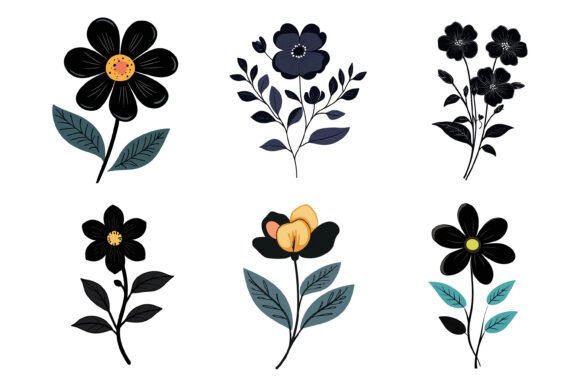
A flower set in the context of AI EPS collections typically refers to a curated group of floral illustrations, botanical elements, or nature-inspired graphics packaged together in vector formats. These sets often include individual flowers, leaf arrangements, wreaths, bouquets, or decorative floral patterns. The key characteristic is that they arrive as editable vector files, meaning each petal, stem, and leaf exists as a separate, modifiable shape rather than a flat, unchangeable image.
The distinction between an AI EPS flower set and a standard stock photo of flowers matters significantly depending on your project. Vector illustrations give you control over color, scale, and composition in ways that raster images simply cannot match. You can recolor a rose from red to deep blue, remove individual elements from a bouquet, or scale a tiny flower icon up to billboard size without losing quality. For designers who need flexibility, this adaptability often justifies the investment.
Comparing Vector Flower Sets with Raster Alternatives
When evaluating a flower set for your work, the first comparison worth making is between vector and raster formats. Raster images—JPEGs, PNGs, and similar files—have fixed resolutions and limited editability. A raster photograph of flowers might look beautiful at its native size, but enlarging it reveals pixelation, and changing colors requires careful masking and adjustment layers that never feel quite as clean as simply selecting a vector shape and applying a new fill.
Vector flower sets, by contrast, maintain crisp edges at any size. This makes them suitable for projects that span multiple formats, from tiny app icons to large-format print banners. The tradeoff, however, is that vector illustrations rarely achieve the photographic realism that some projects demand. If your brand requires lifelike botanical photography, even the most detailed vector flower set will fall short of that standard. Knowing this limitation helps you avoid purchasing resources that cannot deliver what your project actually needs.
Many designers find themselves using both types of resources in complementary ways. A vector flower set might provide icons and decorative elements for a website, while raster photographs supply the hero images. The two formats coexist in most professional workflows rather than competing directly.
Editable AI EPS Collections Versus Static Illustration Packs
Within the vector illustration category, another important distinction exists between truly editable files and those that only appear to be. Some illustration packs arrive with shapes that look organized but are actually flattened or poorly constructed, making meaningful edits frustrating and time-consuming. A well-organized flower set with proper layer structure and logical grouping saves hours of work compared to a messy file where every shape sits on the same layer.
The phrase "neatly organized file and layer structure" signals something valuable to experienced designers. It means you can quickly navigate through elements, hide or show specific flowers, adjust groupings, and make changes without accidentally disrupting unrelated parts of the illustration. For Mac and Windows users alike, this cross-platform compatibility removes friction from collaborative workflows where team members might use different operating systems.
The inclusion of JPG previews alongside the AI and EPS files serves a practical purpose as well. Preview images let you quickly browse through a collection without opening each vector file individually, speeding up the selection process when you are searching for the right floral element among dozens of options.
When a Flower Set Makes the Most Sense
Certain project types benefit more from a dedicated flower set than others. Wedding invitation designers, for example, frequently draw on floral vector collections because their work demands elegant botanical elements that can be recolored to match any event palette. A single flower set might serve fifty different client projects, each time looking distinct because of color adjustments and composition changes.
Branding projects similarly benefit from the consistency that a well-crafted flower set provides. When all floral elements within a collection share the same stylistic DNA—similar line weights, comparable detail levels, coherent design language—they feel like they belong together. This cohesion matters when you are building a visual identity system where floral motifs might appear across business cards, packaging, website headers, and social media templates.
App and web designers working on nature-themed interfaces also find value in these collections. Icons derived from a flower set can populate navigation elements, illustrate features, or add personality to otherwise minimal layouts. The scalability of vector graphics ensures these small details remain sharp across different screen densities and device types.
Situations Where Alternatives Might Serve You Better
Not every floral design need matches what a pre-made flower set offers. If your project requires a highly specific botanical species rendered with scientific accuracy, a general flower set may not include that particular plant, and the stylistic treatment might prioritize aesthetic appeal over botanical correctness. In such cases, commissioning custom illustration work or sourcing specialized scientific illustration resources often produces better results.
Projects demanding a unique, one-of-a-kind visual identity might also benefit from custom illustration rather than a collection available to any purchaser. While you can modify colors and arrangements, the underlying style of a flower set remains recognizable. If exclusivity matters to your brand, the non-exclusive nature of stock illustration collections presents a genuine limitation worth considering.
Budget constraints can also push designers toward free or lower-cost alternatives, though these often come with compromises in organization, detail quality, or licensing terms. The time saved by working with a well-structured paid collection sometimes outweighs the monetary cost, but this calculation varies depending on project scope and available resources.
Practical Considerations for Print, Web, and Multi-Platform Use
A flower set designed for both print and web use bridges a gap that not all illustration resources manage to cross. Print projects typically require CMYK color profiles and sufficient detail to hold up under close physical inspection. Web projects need RGB colors and file sizes that do not slow down loading times. Collections that balance these requirements save you from maintaining separate asset libraries for different output types.
Infographics represent another use case where floral vector elements prove surprisingly useful. Decorative flowers can highlight statistics, frame key points, or add visual interest to data-heavy layouts without distracting from the information. The ability to scale elements up for emphasis or down for subtle accents gives infographic designers precise control over visual hierarchy.
Symbol and icon creation from a flower set extends the utility of these collections further. By simplifying complex floral illustrations into their essential shapes, you can derive clean, recognizable icons suitable for user interfaces or wayfinding systems. This process of reduction works best when the source files contain well-constructed base shapes, reinforcing why file quality matters as much as aesthetic appeal.
Evaluating Detail Quality and Consistency Across a Collection
Perfection in details and consistency across a flower set matters more than casual observers might realize. When multiple illustrators contribute to a collection without strong art direction, individual elements can vary in line thickness, color saturation, and stylistic approach. These inconsistencies become obvious when you place several flowers near each other in a layout, breaking the visual harmony that a cohesive set should provide.
Examining preview images carefully before purchasing helps you assess whether the level of detail remains steady throughout the collection. Look at the smallest and largest elements side by side. Check whether complex flowers receive the same attention as simpler leaves or stems. Consistent quality across all elements indicates thoughtful production values, while noticeable variation suggests a rushed assembly process.
Modification Flexibility and Long-Term Value
The long-term value of a flower set depends heavily on how easily you can adapt it to new projects over time. Color modification capabilities transform a single floral illustration into countless variations. A set of flowers that started as warm-toned summer blooms can become cool winter motifs, monochromatic line art, or vibrant neon accents—all through straightforward color editing.
Beyond color changes, the ability to extract individual elements, combine them differently, or simplify complex illustrations expands what a single collection can accomplish. Designers who invest time learning to modify vector artwork thoroughly often find that a modest collection of well-made flowers sustains their needs far longer than a larger collection of rigid, hard-to-edit files.
The organizational structure of the files affects this long-term usability too. When layers carry meaningful names and logical groupings, returning to a file months later does not require relearning its structure from scratch. This forward-thinking organization reflects professional production standards that experienced designers learn to value through hard-won experience with poorly organized alternatives.
Making an Informed Decision About Your Next Resource Purchase
Deciding whether a particular flower set fits your workflow involves weighing several factors simultaneously. Consider the range of projects you typically handle and whether floral elements appear frequently enough to justify building a dedicated resource library. Think about your comfort level with vector editing software—the modification capabilities that make these collections valuable require some technical skill to fully exploit. Reflect on whether your work spans print and digital formats, since cross-format compatibility adds practical value that single-format resources cannot match.
Time also factors into the equation. Searching for free floral elements, cleaning up poorly constructed files, and fighting with inconsistent illustration styles consumes hours that might be better spent on creative direction and refinement. For many professionals, the efficiency gained from a well-organized, immediately usable flower set represents the most compelling argument for choosing it over piecemeal alternatives.
Ultimately, a flower set illustration collection serves as a flexible foundation rather than a complete solution. It provides building blocks that skilled designers reshape, recolor, and recombine to suit specific project requirements. Understanding this role—and honestly assessing whether it aligns with your workflow and capabilities—leads to more satisfying purchasing decisions than chasing the most extensive or most affordable collection available.