Integrating Bicycle Vector Illustrations into a Seamless Design Process
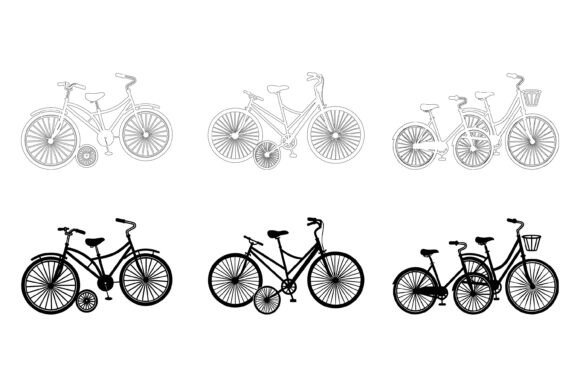
Visual assets form the backbone of most modern communication, from marketing collateral and app interfaces to educational materials and large-format prints. Among the most versatile and universally understood motifs is the bicycle. It represents mobility, sustainability, freedom, and efficiency. When you incorporate a well-crafted bicycle illustration into a project, you do more than fill space—you tap into a shared visual language that resonates across industries. The key to working effectively with such assets lies not only in their aesthetic quality but in how smoothly they integrate into your existing workflow. A professionally built AI EPS and JPG collection, organized with clear layer structures and built for both Mac and Windows, becomes a quiet productivity partner in your creative process.
The right illustration set acts as more than a static image file. It functions as a flexible starting point that adapts to your specific design context, whether you need an icon for a mobile app, a hero graphic for a sustainability report, or a detailed element within an infographic. Understanding how to evaluate, prepare, and deploy these bicycle assets across different stages of a project will save time, maintain visual consistency, and elevate the final outcome. This guide explores the practical side of using bicycle vector illustrations—from initial selection and file organization to editing, compatibility checks, and output for diverse media.
What Defines a Practical Bicycle Illustration Set
Before diving into a project, you need to assess the structural quality of the asset collection itself. A bicycle illustration may look appealing at first glance, but what matters for daily, hands-on work is how it was constructed. The files you receive should include the native AI (Adobe Illustrator) and EPS formats, which preserve full editability, alongside a high-resolution JPG preview for quick placement or reference. This tri-format approach ensures you can work in vector mode for scalable, lossless editing and still have a raster version for immediate use in presentations, mockups, or non-vector environments.
The collection’s organization speaks volumes about its usability. Neatly arranged files and layer structures mean you don’t waste time hunting for a specific wheel variant or handlebar style. Layers named logically—such as “frame,” “chain,” “spokes,” “saddle,” and “background”—allow you to isolate components, apply color changes, or remove unnecessary details in seconds. This kind of forethought in file preparation respects your time and acknowledges that real-world design projects often demand rapid iteration. Perfection in details and consistency across dozens of bicycle poses or styles also matters. If you need a series of icons for a bike-sharing app, the stroke weight, perspective, and level of abstraction must remain uniform, or the user interface will feel disjointed.
Preparing Your Workspace for Maximum Efficiency
Before you open your first bicycle file, take a moment to align your software environment. Confirm your vector editing tool of choice is updated to a version that fully supports AI and EPS formats. Adobe Illustrator is the obvious go-to, but alternatives like Affinity Designer, CorelDRAW, or Inkscape can also handle EPS files reliably. Since the collection is designed for both Mac and Windows users, cross-platform compatibility is already addressed at the file level. However, font handling, if any text elements exist in the illustration, is a separate consideration. A good practice is to convert any required fonts to outlines upon first import to avoid substitution issues later.
Set up a project folder structure that mirrors your broader asset management system. For instance, create a master folder named “Assets_Vector_Bicycle” with subfolders for “Original_Files,” “Edited_Components,” “Color_Variations,” and “Export_Ready.” Copy the source AI and EPS files into the “Original_Files” folder and work only on duplicates. This preserves the pristine originals for future projects and protects against accidental overwrites. If you collaborate with a team, consider storing this folder on a shared drive or cloud service with versioning enabled. The time invested in this preparation step directly reduces friction when deadlines tighten.
Integrating Bicycle Graphics into Real Workflows
The bicycle illustration’s role shifts depending on the project type, but its underlying adaptability remains constant. Understanding a few common use cases makes the integration feel less like guesswork and more like a repeatable, refined step in your process.
Print Collateral and Editorial Design
When a bicycle graphic needs to work in a printed brochure, magazine spread, or poster, scalability and color mode are the first technical checkpoints. Because the source files are vector-based, you can enlarge the illustration to billboard size without a hint of pixelation. Convert the document color mode to CMYK early in your editing process, and adjust any RGB colors from the original palette using the swatch panel. The neat layer structure of a well-designed file allows you to recolor the bicycle frame, wheels, and background independently to match strict brand guidelines. If the original illustration contains gradients or complex shading, review how they separate on press—some gradient types translate better than others. A quick print test on the office laser printer can reveal unexpected banding before you commit to a commercial run.
Web, App, and UI Design
For digital interfaces, bicycle icons and illustrations often serve as navigation symbols, onboarding graphics, or category markers. Here, pixel precision and small-size legibility matter. Because you can edit stroke widths and simplify shapes directly within the AI file, you can create a version optimized for 24×24 pixel icons, removing fine details that disappear at low resolutions. Export for web typically requires SVG or PNG files. The EPS or AI original gives you full control over the export settings. You might want to create multiple size variants, and the consistent layer naming across the set lets you batch-export using Illustrator’s Asset Export panel, saving hours of manual work.
In UI design, changing colors to match light mode and dark mode interfaces is non-trivial with poorly built assets. A bicycle illustration with thoughtfully separated layers lets you swap a dark outline to white, or change the frame color to a vibrant accent, in a few clicks. This kind of flexibility directly supports accessibility audits and brand iterations that are a natural part of digital product development.
Infographics and Data Visualization
Bicycle graphics often find their way into infographics about urban mobility, health statistics, environmental impact, or tourism. In these contexts, the illustration must coexist with charts, numbers, and explanatory text. The ability to modify the bicycle icon to align with a data point—for example, changing the wheel diameter to represent different bicycle types—adds a layer of visual storytelling that goes beyond generic clipart. Since the file includes JPG previews, you can quickly drag a raster placeholder into a report draft while you fine-tune the vector version. Once your final graph layout is approved, you swap in the crisp, fully edited vector graphic.
Editing and Customization Without Breaking Consistency
The freedom to edit shapes and colors easily is one of the strongest selling points of a proper illustration set, but disciplined editing ensures you don’t accidentally introduce inconsistencies. When you modify a bicycle in a set of 20, apply a systematic approach. Start by defining a master color palette in your design software’s swatches panel. Use global color swatches so that if a client later requests a shift from navy to teal, you update the swatch and all instances change simultaneously. If you need to alter the geometry—perhaps rounding the frame joints or changing the handlebar style—make sure to apply the same transformation to the other bicycle icons that will appear in the same project. One practical technique is to save your refined base bicycle as a symbol in Illustrator. Then, when you place variant symbols, any master changes propagate instantly. This approach works particularly well for icon sets that need visual unity across a multi-page document or app.
For complex compositions where a bicycle illustration must interact with background elements, take advantage of the organized layer structure. You can easily mask out sections, apply selective transparency, or duplicate and offset layers to create shadow effects. If the file includes a JPG, use it as a quick reference to compare your edits against the original intent, ensuring you haven’t distorted proportions or lost critical detail.
Maintaining Quality Control and Long-Term Reusability
After you integrate bicycle illustrations into several projects, the collection becomes a reusable asset library. To protect its value over time, establish a few quality control habits. Before archiving an edited file, clean up unused swatches, delete empty layers, and outline any live text that may cause font conflicts later. Save the file in a version that remains compatible with slightly older software if you collaborate with external partners who may not be on the latest release. Both AI (with PDF compatibility enabled) and EPS serve this purpose well.
Consistency reviews should be part of your pre-delivery checklist. Scan across all instances of bicycle graphics in a document or screen flow. Check line weights, corner radius, and color values programmatically if your software supports it—for example, using the Select Same function in Illustrator. Small discrepancies, like a 1.5pt stroke on one icon and a 2pt stroke on another, can undermine a polished look. Catching these early prevents last-minute scrambling.
Another dimension of long-term use is the interplay between vector and raster formats. The included JPG files are handy for quick placements in presentations, Word documents, or content management systems that don’t accept vector uploads. However, always keep the vector source linked. When the time comes to repurpose a graphic for a high-resolution display or a large-scale exhibition print, you will be able to return to the AI or EPS file and export at the exact resolution required. This dual-format availability is a workflow asset that eliminates the need for constant re-sourcing.
Adapting Bicycle Illustrations Across Team Roles
In a collaborative environment, different team members interact with the same illustration set in distinct ways. A marketing manager might drop the JPG into a social media template, a UI designer might need the AI file for a component library, and a motion graphics artist could import the EPS into After Effects to animate the wheels. The cross-format design of the collection, combined with its Mac and Windows compatibility, reduces the technical barriers that often stall collaborative projects. Providing clear file-naming conventions from the start—such as “Bicycle_SideView_Outlined.ai” and “Bicycle_Front_Solid.eps”—helps non-designers locate the right asset without confusion.
When onboarding a new team member, a short internal note on how the illustration layers are structured can dramatically reduce ramp-up time. Highlight that the wheels exist on a separate layer, that the chain can be hidden for simplified icon versions, and that global colors control branding. This kind of documentation turns a static asset pack into a living design system element that actively contributes to team efficiency.
Making the Most of the Purchase and Licensing
Understanding the practical use permissions that come with your bicycle illustration set ensures you can deploy it where needed without uncertainty. Most well-structured collections grant a broad license suitable for commercial print runs, web applications, infographics, and derivative works. Before you begin embedding the graphics into a client deliverable, verify that the license allows modification and inclusion in distributed media—which it typically does. Some sets may require attribution or restrict resale as a standalone asset, but rarely restrict actual usage in your designs. Having this clarity early prevents workflow interruptions later.
Finally, treat the purchase as an investment in your creative toolkit. The initial time you spend familiarizing yourself with the files, testing edits, and setting up a reusable master file pays back many times over. A bicycle illustration set that offers editability, neat organization, and platform flexibility aligns with a mindset that values thorough preparation and practical implementation. It quietly supports everything from rapid prototyping to polished final deliverables, allowing you to focus on the bigger picture—whether that’s launching an app, printing a sustainability brochure, or designing a city’s bike-share map.