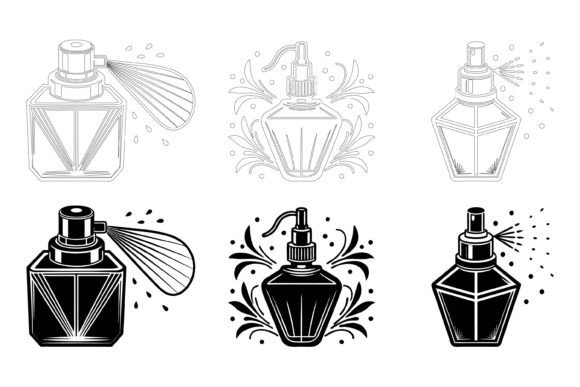
Perfume Bottles: Evaluating Pre-Made Illustration Sets for Design Projects
Selecting the right visual assets for a branding project, packaging presentation, or marketing campaign can be a time-intensive process. For designers working with fragrance-related themes, pre-made illustration sets featuring perfume bottles offer a practical middle ground between custom illustration and generic stock imagery. Understanding what these collections include, how they perform in real-world workflows, and where their limitations lie can help you decide whether they align with your project goals.
What a Perfume Bottle Illustration Set Actually Contains
At its core, a dedicated perfume bottle illustration set is a curated collection of vector-based artwork depicting various fragrance bottle silhouettes, designs, and decorative elements. Unlike scattered individual downloads, these sets typically bundle multiple bottle styles—ranging from classic flacons to modern minimalist atomizers—into a single organized package.
The file structure matters considerably in professional environments. Most well-organized collections include the original AI EPS formats alongside flattened JPG previews, giving you the flexibility to work in Adobe Illustrator or other compatible vector software. The EPS format in particular remains valued for its cross-platform reliability, functioning on both Mac and Windows systems without conversion headaches. Layered files with logically named groups and sub-layers allow you to isolate specific design elements, toggle visibility, and make targeted edits without hunting through unnamed paths or compound shapes.
Attention to detail in the artwork itself—consistent stroke weights, properly closed paths, uniform styling across all assets—determines whether the set integrates smoothly into a professional workflow or creates additional cleanup work. Sets that emphasize consistency across illustrations tend to reduce friction when you need to combine multiple bottle designs within a single layout.
Why Designers and Marketers Consider These Collections
The appeal of a ready-made perfume bottle vector set often stems from practical workflow considerations rather than aesthetic preference alone. Several factors push creative professionals toward these resources:
- Time constraints on branding mockups. When presenting fragrance packaging concepts to clients, generating bottle illustrations from scratch for each iteration can delay feedback cycles. Pre-drawn assets with editable properties let you adjust colors, labels, and finishes rapidly without starting over.
- Consistency across multiple deliverables. A unified illustration style maintained throughout a set helps when you need to create matching visuals for print collateral, web graphics, app interfaces, and infographic elements. Manual illustration often introduces subtle stylistic drift across multiple pieces.
- Budget realities for smaller studios. Commissioning custom perfume bottle illustrations for every project may not be feasible for freelance designers, small agencies, or in-house teams with limited resources. A one-time purchase of a versatile set can serve across multiple client projects with appropriate customization.
- Exploration and ideation. Browsing a variety of bottle shapes and design directions within a set can spark ideas that might not emerge from sketching alone, functioning as visual reference material as much as final artwork.
Practical Benefits of Using Vector Perfume Bottle Assets
Vector-based perfume bottle artwork offers specific technical advantages that raster alternatives cannot match. Understanding these benefits helps clarify why certain projects benefit from this format.
Scalability remains the primary strength. A perfume bottle illustration in vector format retains crisp edges at any dimension, whether it appears as a small app icon or a large-format print display. This eliminates the need to maintain multiple resolution versions of the same asset. Color modification is equally straightforward—global swatches and editable fills mean you can shift a bottle from amber glass to frosted blue in seconds, matching brand palettes without manual recoloring work.
For projects spanning multiple media types, the flexibility becomes even more apparent. The same perfume bottle artwork can appear in a printed brochure, an animated social media post, a product catalog thumbnail, and an infographic breakdown, each requiring different sizing and color treatments. Well-structured files with proper layer organization make these adaptations considerably faster than exporting and modifying raster images repeatedly.
Compatibility with industry-standard editing software ensures these assets fit into existing workflows. Because AI and EPS files open natively in Adobe Illustrator and can be imported into many other design applications, team members across different roles—from graphic designers to web developers needing SVG exports—can work with the same source files.
Tradeoffs and Limitations to Keep in Mind
Pre-made perfume bottle sets are not a universal solution, and approaching them with realistic expectations prevents disappointment during project execution.
Distinctiveness is inherently limited. Any set available for purchase can be purchased by other designers as well. If your project demands a truly unique fragrance bottle identity—particularly for an actual product launch rather than a mockup—stock-style illustrations may not provide sufficient differentiation in the marketplace. Custom illustration becomes more compelling when brand distinctiveness is a priority.
Style alignment requires careful vetting. A perfume bottle illustration drawn in one aesthetic direction may not suit a brand positioned in an entirely different visual territory. Detailed, ornate bottle designs might feel incongruent with a minimalist skincare-adjacent fragrance line, while ultra-simple geometric bottles could underwhelm for a luxury parfumerie presentation. Checking the illustration style thoroughly against your intended application matters more than the quantity of assets included.
Editing depth varies by file construction. While many sets advertise easy editability, the actual experience depends on how thoughtfully the files were built. Complex clipping masks, poorly named layers, or embedded raster effects can complicate what initially appears simple. Sets with transparent layer structures and clean path construction reduce unexpected editing barriers.
Licensing terms shape usage scope. Before incorporating perfume bottle illustrations into client work or commercial products, reviewing the specific license is essential. Some sets permit broad commercial use, while others restrict application to personal projects or require attribution. Assuming unlimited usage rights can lead to complications later.
When a Pre-Made Perfume Bottle Set Is a Strong Fit
Certain project scenarios align particularly well with what these illustration collections offer. Recognizing these situations helps you make confident purchasing decisions.
Mood boards and early-stage branding exploration benefit from the variety these sets provide. Presenting multiple bottle shape directions to a fragrance client becomes faster when you can pull from a library of editable options rather than sketching each concept individually. The ability to quickly recolor bottles to match tentative brand palettes adds further value during exploratory phases.
Educational and informational content—such as infographics explaining fragrance concentration levels, blog posts about bottle design history, or app interfaces for virtual perfume collections—often needs clear, professional-looking bottle illustrations without requiring custom artwork. The organized structure and print-ready quality of well-prepared sets serve these contexts effectively.
Marketing teams producing seasonal campaigns, email newsletters, or social media content for an existing fragrance brand may find that these illustrations provide enough variety to maintain visual freshness across multiple touchpoints. The cross-platform compatibility ensures the same assets work for both print and digital execution without format conflicts.
Template designers building assets for resale or client delivery can integrate these perfume bottle elements into larger design systems, customizing colors and details to fit diverse end-user needs while maintaining consistent underlying quality.
Situations Where Alternatives Deserve Consideration
Just as important as knowing when a pre-made set works is recognizing when other approaches better serve your goals.
For an actual product launch with a custom-designed fragrance bottle, nothing replaces original illustration or 3D rendering based on the physical object. Pre-made assets can supplement marketing materials but should not substitute for accurate product representation where consumer expectations and purchasing decisions are involved.
Highly specialized aesthetic requirements—such as perfume bottles rendered in a specific artistic style, with particular cultural motifs, or matching an established illustration system—may exceed what any general-purpose set can deliver. In these cases, commissioning a custom illustrator yields results more closely aligned with the creative brief.
Projects with extensive animation needs may find static vector illustrations insufficient as starting points. While you can technically animate EPS-based artwork, assets originally designed with motion in mind—with separated, logically grouped elements anticipating movement—streamline animation workflows considerably.
Evaluating Quality Before Committing
Making an informed choice involves looking beyond preview images to assess the underlying asset quality. Several practical checks can guide your evaluation.
Examine the file format details. Confirm that the set includes the specific formats you need—AI and EPS for editable vector work, plus any supplementary formats like JPG for quick placement. Verify that the files were designed for both Mac and Windows environments to avoid cross-platform compatibility surprises.
Assess organizational structure. Well-organized files with descriptive layer names, logical grouping, and a clean hierarchy save significant time during editing. Disorganized files with unnamed paths and scattered elements complicate even simple modifications.
Check for consistency. Browse through multiple assets within the set and observe whether the illustration style, level of detail, and overall quality remain consistent. Variation in treatment across pieces can undermine the professional appearance of your final design.
Consider the editing experience. Look for sets that explicitly describe how easily you can change colors, modify shapes, and adapt the illustration to your needs. The ability to edit efficiently matters as much as the initial artwork quality.
Review the usage scope. Confirm that the intended application—whether print, web, symbols, apps, or infographics—falls within the set's designed capabilities. Some vector artwork optimized for one medium may require adjustment for another.
Making a Decision That Supports Your Workflow
Choosing whether to use a pre-made perfume bottle illustration set ultimately depends on balancing creative needs with practical constraints. When the primary goal involves generating professional-quality fragrance visuals efficiently—with full editability and cross-platform compatibility—and the design style aligns with your aesthetic direction, these collections can accelerate your workflow meaningfully.
When distinctiveness, specialized aesthetics, or accurate product representation rank higher as priorities, directing resources toward custom illustration or photography typically yields stronger outcomes. Many designers find that maintaining both approaches—a library of versatile pre-made assets for common needs, supplemented by custom work for signature projects—creates the most adaptable toolkit.
The availability of organized AI EPS files that function across Mac and Windows systems, deliver consistent detail, and remain editable for print, web, and interactive applications makes certain perfume bottle illustration sets practical resources for working designers. Evaluating individual sets against the specific demands of your upcoming projects—rather than against an abstract ideal—leads to more satisfying purchasing decisions and ultimately, more effective design outcomes.